
Flagship Clean-Energy Technology
Solar-Ice — Compressor-Free Night Cooling
A patent-pending system architecture that shifts refrigeration toward solar hours, stores cooling as ice and delivers it through the designed nighttime period without running the compressor.
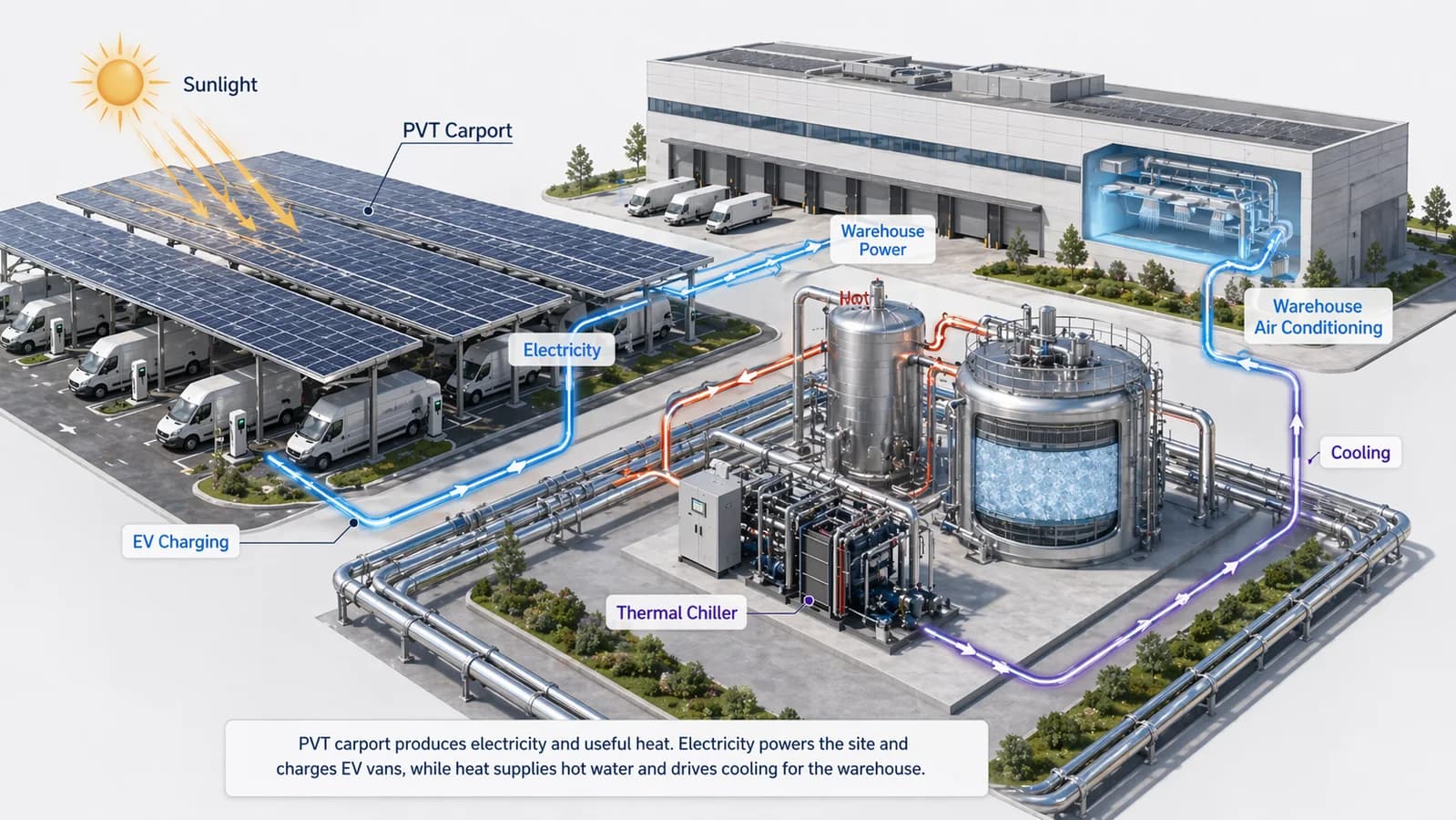
The architecture
Make cooling when solar energy is available. Use the stored cooling after sunset.
During the day, the electrical output from the photovoltaic-thermal array powers the refrigeration process that produces ice. The recovered thermal output can be directed to hot-water or other useful heating applications.
The ice thermal storage tank is sized for the required period without solar generation. During normal designed nighttime operation, the compressor remains off. Pumps, fan-coil fans, valves, sensors and controls distribute the stored cooling, supported by an auxiliary battery sized for those lower-power loads.
An emergency compressor may remain available as an optional backup for exceptional conditions. It is not part of the normal designed nighttime mode.
Day-to-night operating cycle
PVT electricity
Powers daytime refrigeration
Ice production
Stores cooling for the night
Compressor off
Normal designed night mode
Low-power delivery
Pumps, fans and controls
Recovered thermal output
Directed to hot-water or other useful heating applications.
Auxiliary battery
Sized for the low-power nighttime loads, not the compressor.
Design objectives
Projected performance, clearly qualified
Up to 80%
Projected Grid-Energy Savings
Up to 90%
Projected Operational CO₂ Reduction
24/7
Designed Cooling Availability
Energy accounting
Six outcomes that must remain separate
Solar-Ice is evaluated through distinct technical categories. No single percentage should be used as a substitute for the full engineering model.
Grid-energy reduction
Electricity no longer purchased from the grid because solar generation supplies the process.
Total source energy
The complete energy required to produce, store and distribute cooling.
Peak-demand reduction
How system scheduling changes the facility’s highest electrical demand.
Night compressor elimination
Whether the compressor remains off through the designed autonomy period.
Operational CO₂ reduction
Emissions avoided under the selected energy and operating assumptions.
Recovered thermal energy
Useful heat directed to hot-water or other thermal applications.
Technical validation
The engineering report will connect the claims to real inputs
CO2Zero is preparing a Solar-Ice Technical Performance and Energy Savings Report. The model will require a reference climate, building load profile, PVT output, chiller capacity and COP under ice-making conditions, tank losses, heat-exchanger performance, auxiliary power, battery capacity and a defined conventional baseline.
Until the report is complete
- Every percentage remains projected
- No field-measurement claim is made
- Grid energy is not shortened to total energy
- Emergency backup remains separate from normal operation
Intellectual property
Patent Pending, not a granted patent
Solar-Ice is the subject of a U.S. provisional patent application. The filing documents the disclosed architecture while technical development continues. It does not guarantee that a patent will be issued, and Solar-Ice is not presented as a commercially available installation.
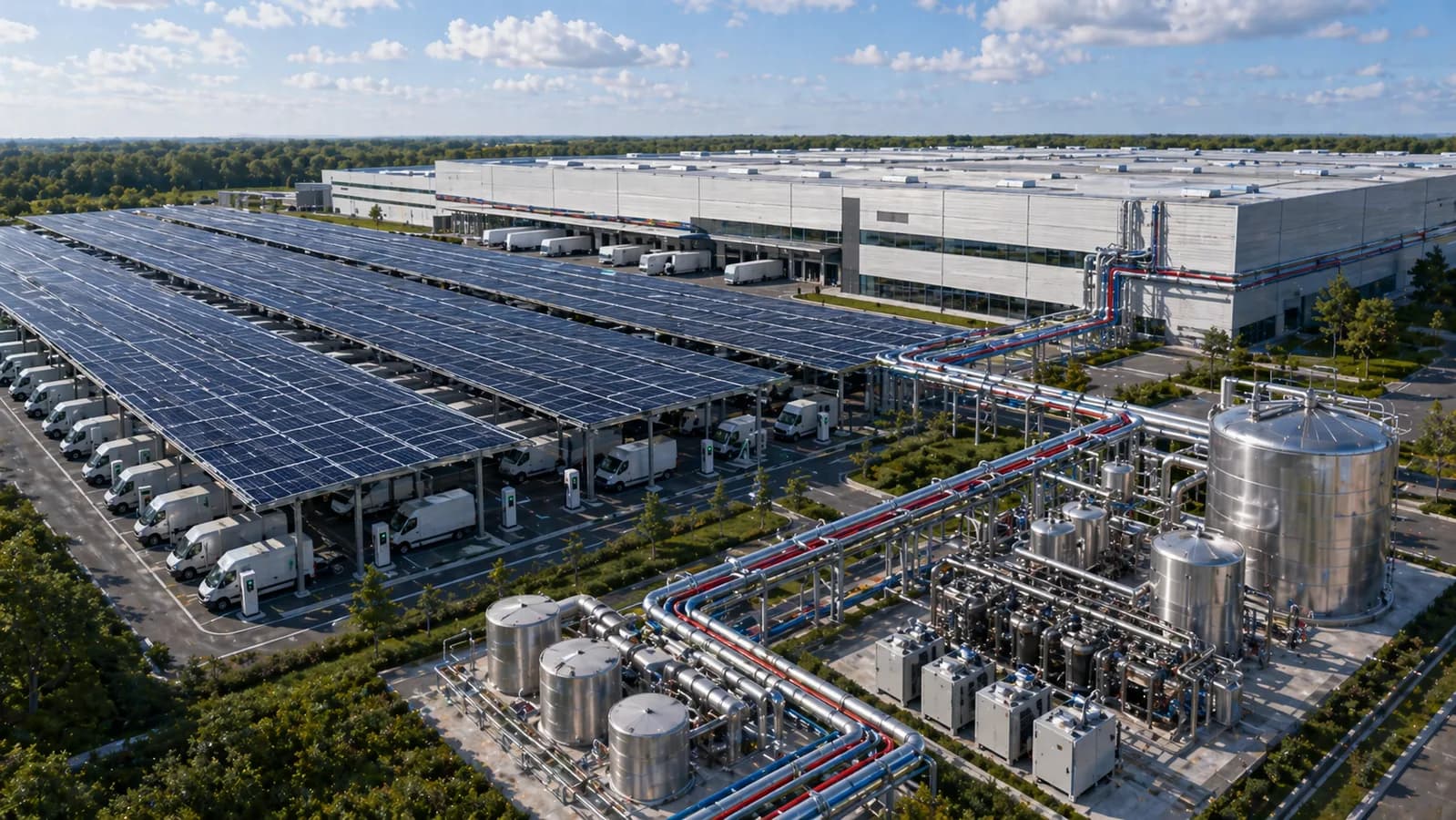
Discuss Solar-Ice for a future project or partnership.
Start with the climate, cooling load, required nighttime autonomy and intended use of the recovered thermal output.